The EU’s plan to make electricity uniformly expensive for all.
Feb 11, 2026
∙ Paid
“The more storage you have, the more stuff you accumulate.” – Alexis Stewart
While doomscrolling ZeroHedge early Friday morning—as one does—we learn that Finland’s foray into the world of wind energy isn’t going well. Having invested to the point that wind is now the country’s second-largest source of electricity, residents are grappling with reduced supply and skyrocketing prices, with many forced to burn wood just to stay warm. Wind generation has all but gone dormant during an epic cold snap, made worse by the decision to skimp on expensive in-blade heating technology that could have minimized ice formation.
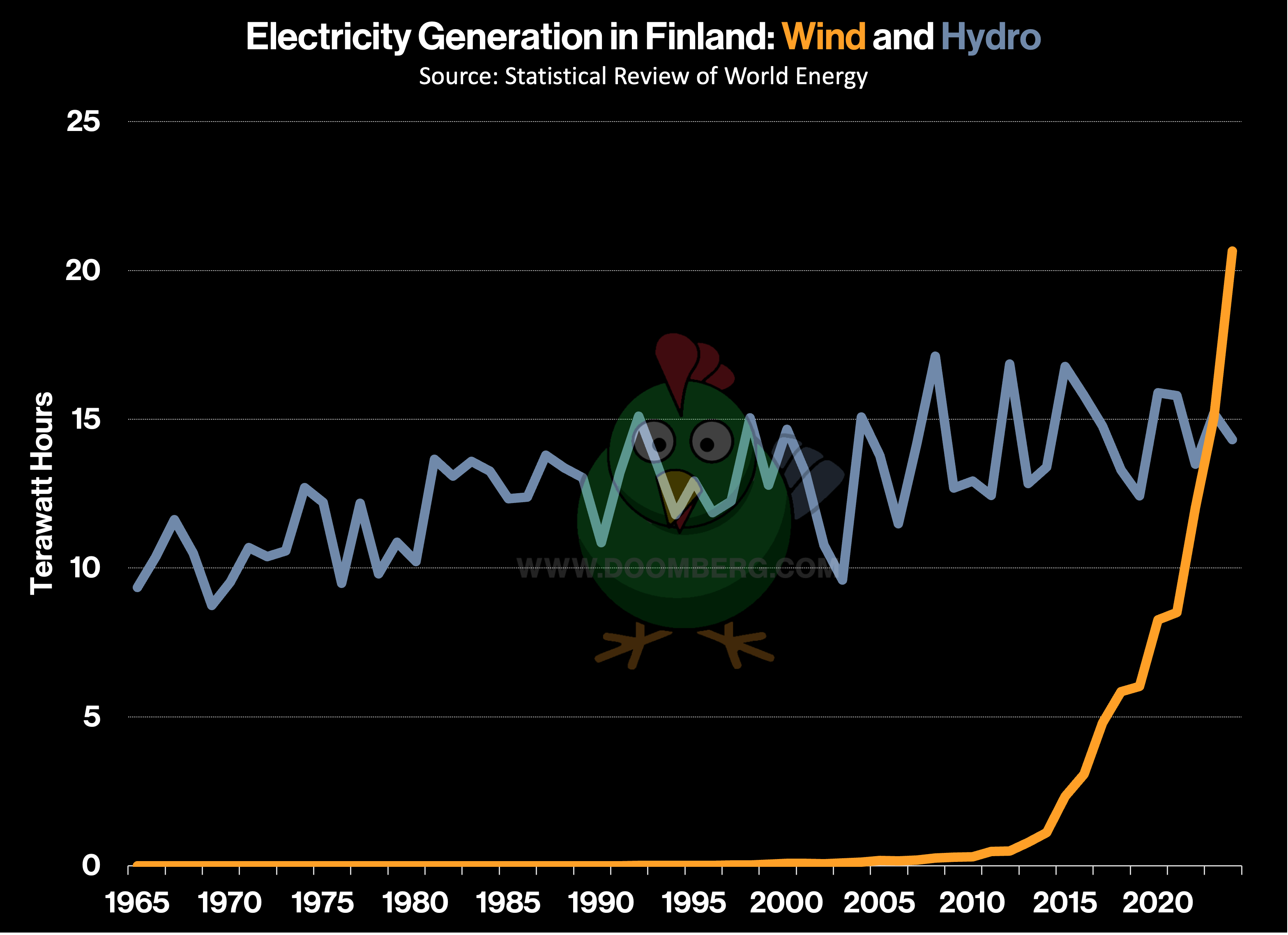
Even without looking, we guessed that intermittent sources of electricity in Finland must now exceed highly dispatchable ones—a predictable point of pain where stuff begins to break. Sure enough, a quick check of government data and the Statistical Review of World Energy reveals that the country sourced 39% of its power from nuclear reactors, 25% from wind, and 18% from hydroelectric facilities in 2024, and the rest from other sources and imports. Although nuclear is an excellent source of baseload power, it is not ideal for rapid load-following. With Finland systematically weaning itself off natural gas, its hydroelectric dams have been left to do the heavy lifting. See if you can spot the problem:
Another shortcoming is the slow pace at which Finland has been installing battery backup systems, not that a faster pace would have meant much. As of mid-2025, the country had just 0.25 gigawatts (GW) of grid batteries in operation, or about 1 gigawatt-hour (GWh). By our math, this is enough capacity to backstop grid demand for roughly six minutes.
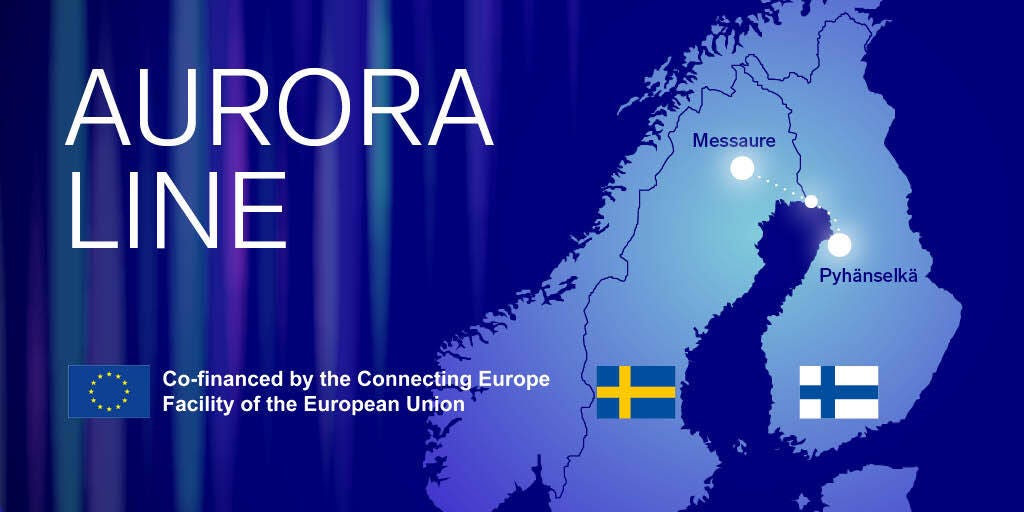
To avoid grid collapse, Finnish authorities implored citizens to rein in demand, a message that soaring day-ahead electricity prices drove home. Ultimately, imports from neighboring countries helped abate the crisis, with Sweden in particular coming through in the clutch. In November, the two countries celebrated the go-live of the new Aurora Line 400 kV interconnector between northern Sweden and Finland, a project that increased total cross-border capacity in both directions to about 2 GW.
Stick save
The net effect of Finland’s wind-induced crisis was to raise prices for consumers in Sweden, of course, as excess supplies were used to equilibrate the two markets. A small price to pay for solidarity and the carbon cause, no doubt. Swedish power companies presumably did well, capturing gains on both sides of the border.
The Aurora Line is but one of a series of major infrastructure investments envisioned by leaders of the European Union (EU) that will harmonize electricity markets across its member states and other countries like Britain, Norway, Switzerland, Ukraine, Moldova, and Turkey. The Western Balkan nations and several North African neighbors will also be linked in, creating the world’s largest grid.
The key driving force is the need to solve for the intermittency that results from excess wind and solar generation capacity. Hundreds of billions of euros are being earmarked for the task. As the thinking goes, excess production of renewable energy in one area will help buffer shortages in another, smoothing out the worst lulls in any particular country.
That’s certainly one view of what is being built. Naturally, we have another…

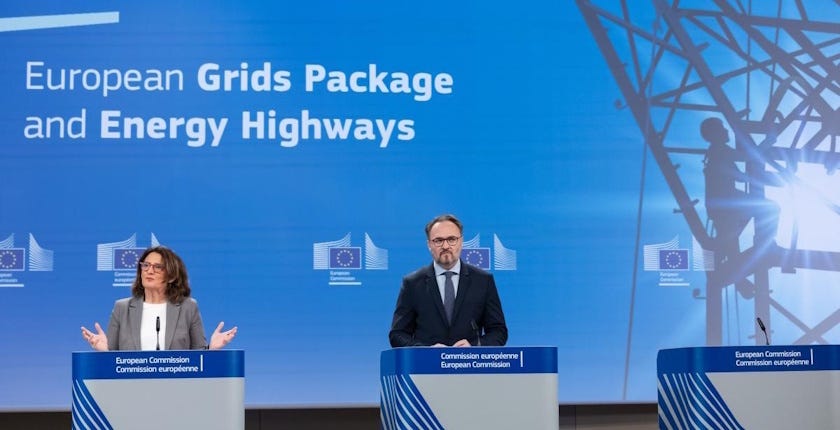
In mid-December, the European Commission rolled out what it calls the European Grids Package and Energy Highways, an array of sweeping proposals ostensibly meant to improve electricity flows across the continent. This word salad attempts to explain how things will be governed under the new plan:
“Subject to parliamentary approval, the European Grids Package and Energy Highways initiative includes new guidance on grid connections, contracts for difference guidance, proposals to accelerate infrastructure project planning, and a proposal to revise the Trans-European Network for Energy (TEN-E) Regulation governing cross-border energy infrastructure…
The newly published European Grids Package also sets out plans to move to an EU cross-border energy infrastructure planning framework intended to facilitate a more coordinated approach to upgrades. Within two years of the grid package coming into force, the European Commission must develop a comprehensive central EU scenario consistent with the trade bloc’s energy and climate targets. The European Network of Transmission System Operators for Electricity (ENTSO-E) and the European Network of Operators for Hydrogen (ENNOH) will then use this scenario to identify infrastructure needs.”
Central planners
Critics charge that the initiative amounts to little more than a power grab by Brussels, which seeks to assert bureaucratic control over decisions best left to EU member states. Of particular concern is the proposal that 25% of so-called congestion profits—outsized revenues generated when one country bails out another in the way Sweden just did for Finland—be swept into a centralized fund to help pay for projects on the Union List, which includes Projects of Common Interest and Projects of Mutual Interest. Believe it or not, there’s actually a difference between these two categories, but we leave it to the reader to sleuth that one out.
The bureaucratic brawl over congestion profits immediately leads to an important conclusion: That such profits exist at all is proof that the forced introduction of intermittent renewables onto existing grids necessarily increases the final cost of electricity to consumers. The inelasticity of demand for something so fundamental as electricity means that marginal pricing during even minor shortages can vastly increase the overall profit potential for suppliers—and wind and solar are nothing if not great at creating shortages. It is no surprise that Sweden is among the most vocal critics of the EU’s initiative. For now, at least, it is in possession of excess dispatchable electricity and is anxious to fill its coffers at the expense of its neighbors, even if its own consumers pay a little more along the way.
In what can only be described as a monumental combination of hypocrisy and irony, a core justification for this centralization of power is the need to overcome environmental opposition to large infrastructure projects. We kid you not:
“Lawmaker Christian Ehler, European People’s Party spokesperson for the European Parliament’s industry, research and energy committee, said the revamping of European grids is ‘crucial’ to lowering energy prices, but also asked for more regulatory oversight for the EU – even where its decisions might go against environmental standards.
‘We also need to be way bolder on the permitting part,’ said Ehler. ‘Certain exemptions from parts of the environmental legislation are not enough.’
‘We need to change the underlying legislation and turn the permitting procedures upside down. Energy projects deliver on the energy transition; environmental protectionism should not stand in the way of that.’” [There you go. Birds, bats, habitat and landscape protection must take a backseat to the “energy transition.”]
As fun as it might be to take a few rhetorical jabs at Brussels, we close by noting that things on the Old Continent are about to go from bad to a whole lot worse. Returning to our simple but effective analytical tool—plotting highly dispatchable sources of electricity against intermittent ones like wind and solar—it becomes apparent that a new paradigm of pain awaits European consumers:
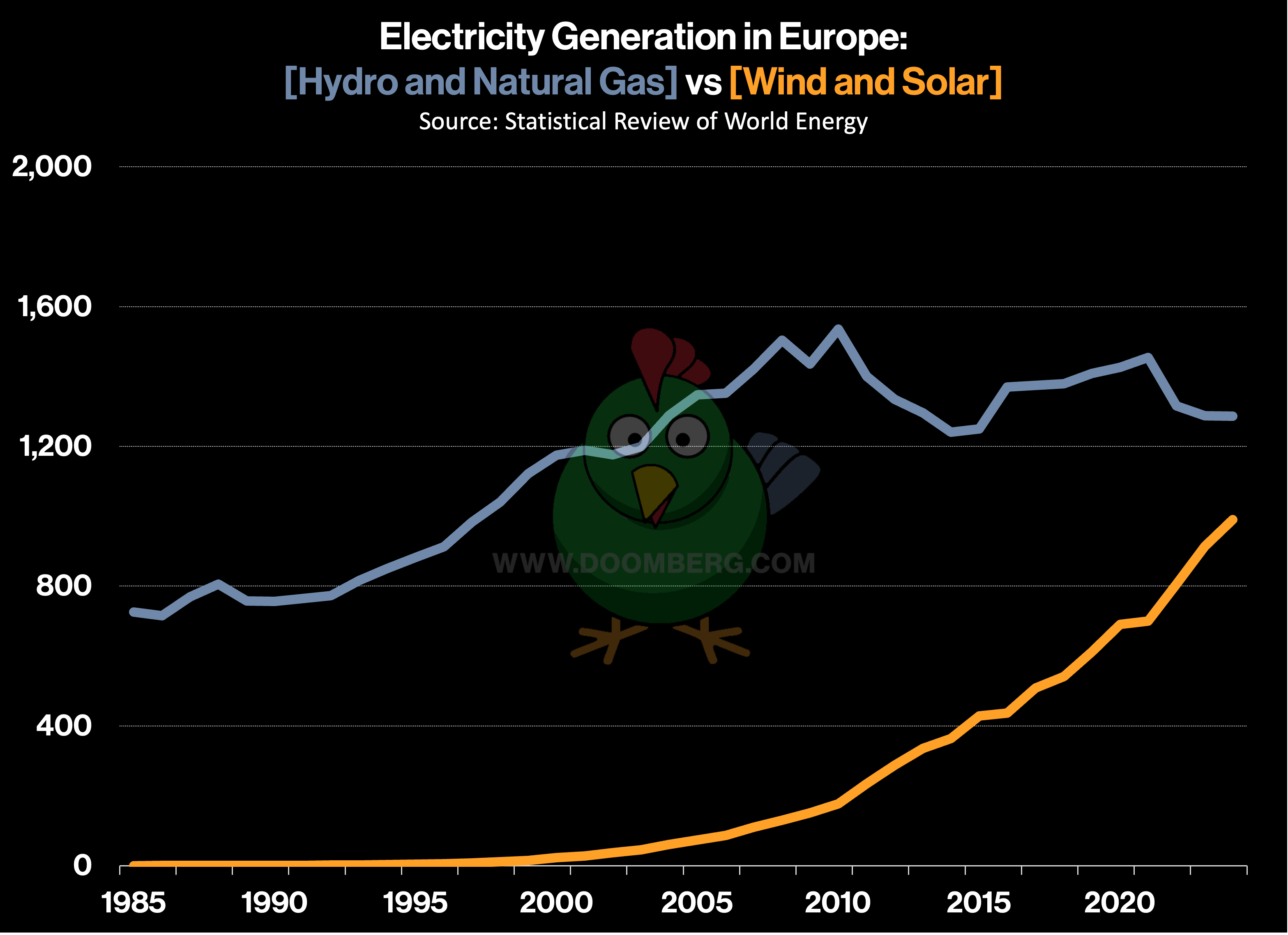
It won’t be long before what happened in Finland repeats itself across a broader area. While the strategy of connecting every corner of Europe to one centrally planned grid might sound good on paper, the net effect will merely be to increase the brutal efficiency of cost allocation across borders. The wind will die down in enough places at the same time, long periods of cloudy weather will afflict significant areas simultaneously, and total capacity from highly dispatchable sources will regularly be exhausted. Prices for all consumers will continue their inexorable rise, as will the insatiable concentration of authority in Brussels.
Comments
Post a Comment