Necessary Inventions
Sep 05, 2026
“Here is the test to find whether your mission on Earth is finished: if you’re alive, it isn’t.” – Richard Bach
Among the most ironclad, stone-cold, lead-pipe-lock bets of history is that aggregate primary energy consumption is a curve that goes up and to the right. Longtime readers will be familiar with the physical foundations for why this is so: The human endeavor is a constant, unrelenting struggle against the forces of entropy; one must harness primary energy to temporarily prevail in that struggle; one’s standard of living is thus measured by how much primary energy is on offer for the task; and all humans everywhere want a higher standard of living.
Wars, famines, political crises, and pandemics come and go. Degrowth nutters and carbon-counters ebb and flow in their political influence. Social shaming to make do with less—an impulse that invariably emanates from do-gooders already flush with abundance—occasionally bends localized policy for short periods of time. And yet, all small wiggles down in aggregate energy consumption rapidly mean regress.
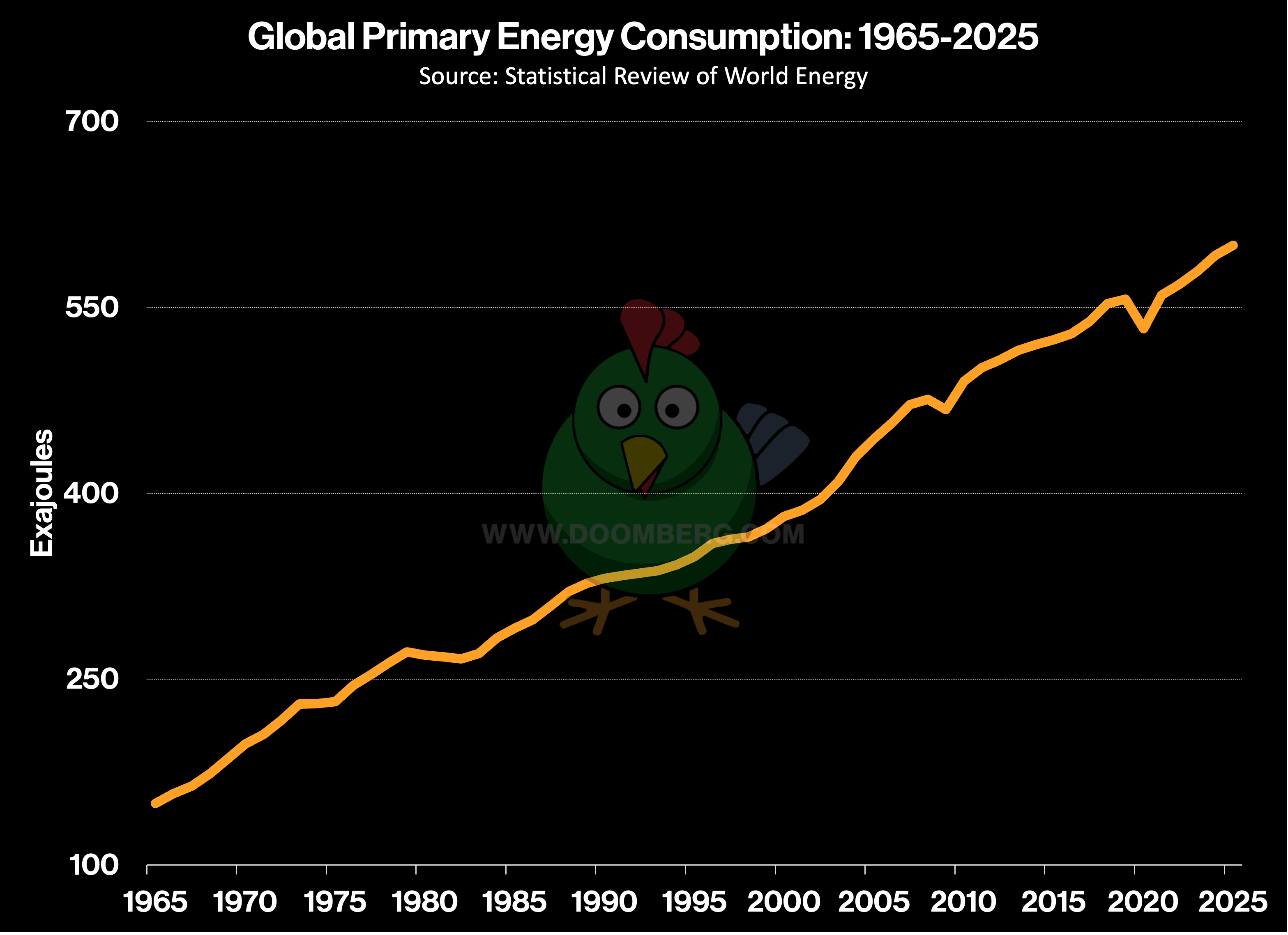
Despite such sound theoretical substance and a mountain of confirmatory empirical evidence, legions of otherwise lucid energy-market participants serially bet against this trend. Shale gas in Appalachia will never be economic. Global crude-oil production has peaked (again). Natural gas liquids don’t count. The price on the screen is wrong. Have you seen the decline rates in the Haynesville? It’s cold in the Arctic. There’s corruption in Mexico. Justin Trudeau was once a thing. The easy stuff has already been lifted. Russia can’t keep oil flowing without Western help. China’s shale resources are prohibitively uneconomic. Cushing’s tanks are bottoming out.
Good-natured fun-poking aside, energy pessimism is a useful signal in one important regard: One can predict, with uncanny accuracy, that whatever the attention of the we-are-about-to-run-out crowd is focused on will be the genesis of an imminent innovation breakthrough.
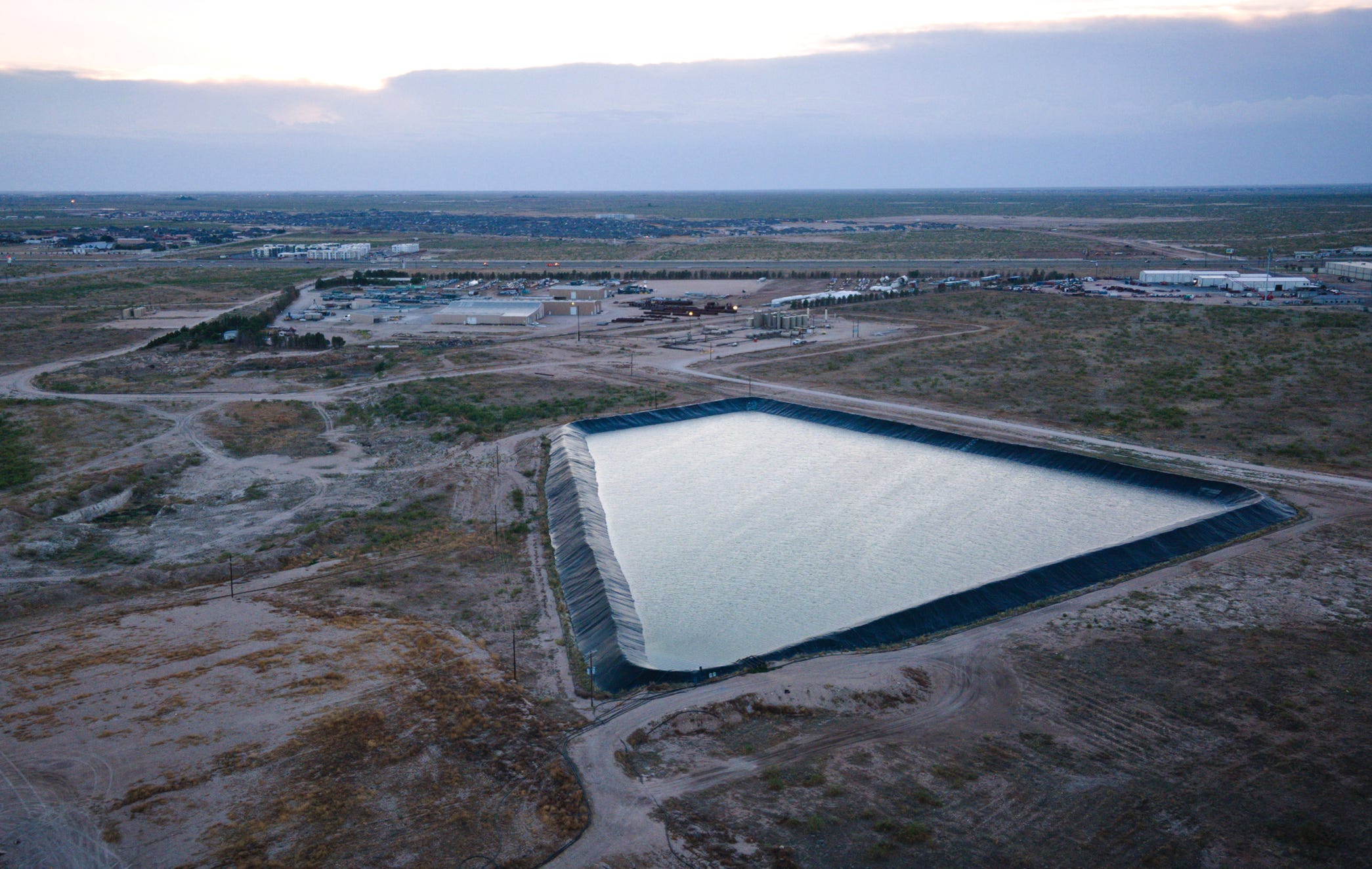
Consider the all-important Permian Basin, simultaneously responsible for a huge slice of global crude oil production growth over the past decade and subject to endless claims that production must soon peak and then fall precipitously. The latest ghost going bump in the night is the burgeoning problem of produced water. For the uninitiated, there are roughly 3 to 4 barrels of highly contaminated and hypersaline water brought to the surface for every barrel of crude lifted across the Permian. With crude production approaching an incredible 7 million barrels per day (bpd), what to do with the undesired gusher of hydration has many concerned that growth there is finally on the cusp of drowning.
Naturally, we hold a different view. The very scale of the problem is the accelerant for finding workable solutions, and strong signs indicate that scientists and entrepreneurs will soon crack it. When they invariably do, robust riches will certainly accrue. Let’s head to West Texas and check in on some of the latest progress.

Few would argue that produced water is not rapidly becoming an urgent problem. In late August, a story published in the Texas Tribune highlighted how the industry’s preferred solution of injecting the water into deep disposal wells is reaching physical limits:
“Elected officials and industry leaders warn that Texas is at the ‘precipice’ of running out of underground space to dispose of the nearly 1 billion gallons of wastewater that oil and gas production generates every day in the Permian Basin.
The toxic wastewater, known as produced water, is usually injected underground into disposal wells. But these wells have increased underground pressure, triggering earthquakes and blowouts. Instead of underground injection, the oil industry is now seeking alternatives to treat and reuse produced water.
Industry experts made clear last week, at a legislative hearing in Austin and a conference in Midland, that a lack of disposal space could soon constrain oil production in the Permian Basin.”
Drowning in the stuff
An entire specialized midstream-asset ecosystem has risen to meet this constraint—one company’s costs are another’s revenue, after all. Included among the mix of assets and capabilities being deployed are gathering pipelines, storage facilities, centralized recycling plants, saltwater-disposal wells, and a requisite army of associated field service providers. However, as the above report makes clear, produced water risks becoming more than just an expense to be managed. As with the huge volumes of natural gas that often have to be given away just to keep crude flowing, creative solutions and substantially more investment will be needed in the years ahead.
Among the more exciting developments are high-recovery desalination coupled with brine management. In this approach, treatment trains convert produced water into a reliable source of industrial-grade water, with concentrated salts left behind. Although steady progress is being made, the lack of a sufficient number of end-use customers permitted to use the resulting water streams is still a real barrier. Such water is only as valuable as paying customers are willing and allowed to receive it, and such entities are currently in sparse supply in the dusty open expanses of West Texas.
Enter data-center projects. These proposed industrial behemoths certainly need huge volumes of cheap natural gas, something the Permian has in ample supply, but one of the main drivers of local opposition has been fear of overburdening regional water tables. Has there ever been a more elegant match between problem and solution?
For clues that such nuptials are soon to be exchanged, we turn to Chevron and its giant Kilby data-center project in Reeves County, Texas. Barreling toward final investment decision by the end of this year, Kilby stands a significant chance of being both successful and precedent-setting. A recent review of the effort published in RBN Energy leaves no mystery as to why this project is being watched so closely:
“Project Kilby’s development also opens significant revenue-enhancing opportunities for other participants in the project. For example, Chevron has pointed out that securing reliable, non-potable brackish water is a priority for minimizing the facility’s environmental footprint. Chevron engaged with Texas Pacific Land (TPL), which controls 900,000 acres in West Texas, including a dominant footprint in Reeves County. TPL announced it contributed surface acreage for Kilby, received cash considerations, and secured exclusive rights to source brackish groundwater for the project. TPL could also support future produced water reuse, aligning with Chevron’s emphasis on responsible water management and community engagement.”
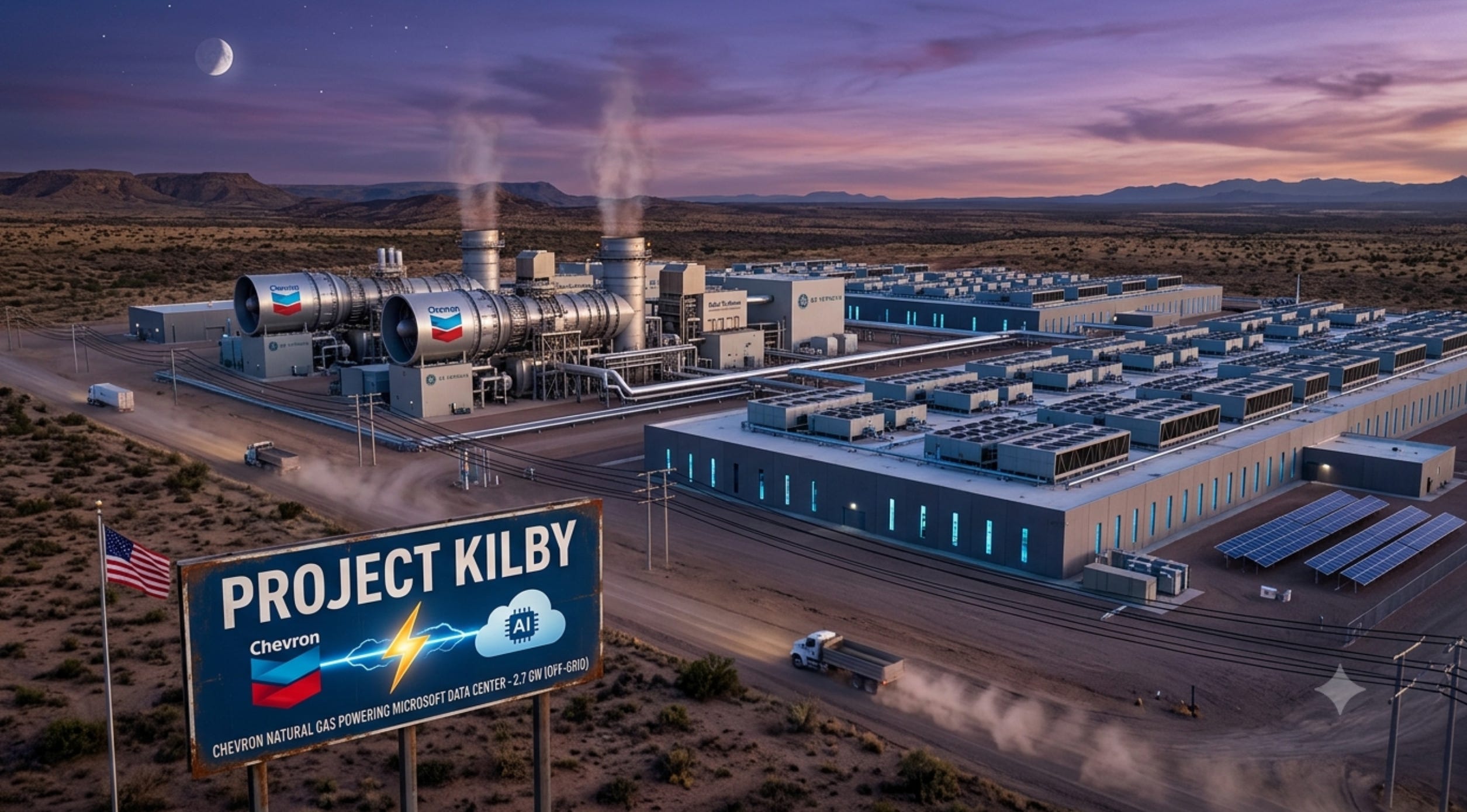
AI rendering of an AI data center
Zooming out, consider the forces lining up on the two sides of the probability scale. On one sits virtually limitless volumes of free natural gas, a tsunami of produced water, a driving need to monetize both, and the bluest of blue-chip American corporate juggernauts going all out to find a workable solution. The prize isn’t just continued growth and margin expansion in one of the most prolific hydrocarbon basins on the planet, or even the further enabling of US energy dominance; it is also meaningfully contributing to the single greatest national-security imperative of our generation: winning the AI race against China.
On the other side sits a cadre of energy pessimists whose tendency to goal-seek negativity has led to a nearly unbroken string of erroneous forecasts since shale became a household word.
As far as premises that predict go, this one is a layup.

Comments
Post a Comment